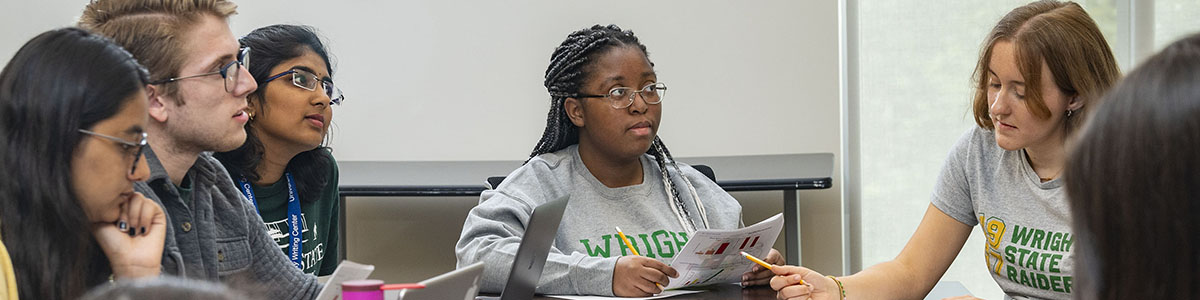
Get personalized academic support through the Academic Success Centers.
The Academic Success Centers (ASC) are your partners in learning. Our free, peer-facilitated services can support you with strategies for studying more effectively, support for projects, assignments, and presentations, and skills to help you succeed through college and beyond. Whether you need help with a single assignment or support throughout the semester, the ASC is here to help you.
Schedule an appointment or drop in today to see how we can help you achieve your academic goals.
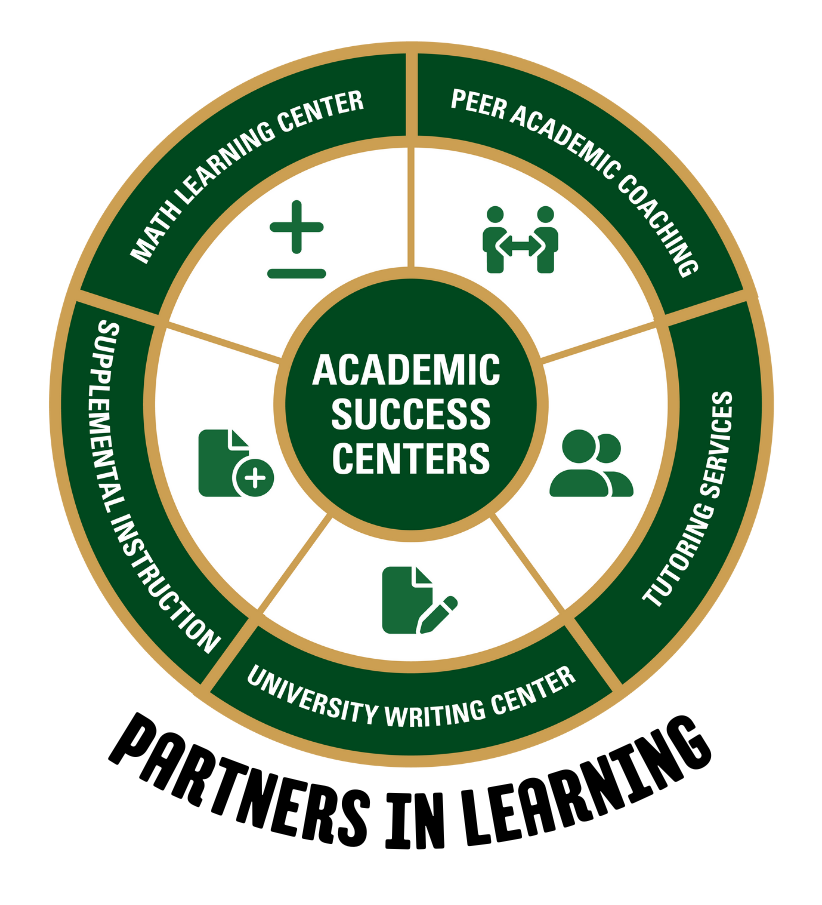
plus-minus
Math Learning Center
Free tutoring for introductory math and statistics courses. Graphing calculator rentals.
people-arrows
Peer Academic Coaching
Develop academic goals, time management, study skills, and accountability to maximize your success. Open to all students.
file-circle-plus
Supplemental Instruction
Experienced peer-led review sessions for select introductory courses. See SI schedule for options.
user-group
Tutoring Services
Free tutoring for several introductory courses across all colleges and majors.
file-pen
University Writing Center
Get personalized help at any stage of the writing process. Sign up for writing support for any course.
briefcase
Work in the Academic Success Centers
Work as a tutor, supplemental instruction leader, peer academic coach, or writing coach.
"You continue to make me a better student. With your help, my grades have improved by leaps and bounds. Thank you once again for making me feel comfortable throughout the process. "
-Anthony W., student
Mission
The Academic Success Centers supports learning on campus by empowering learners at all stages of their academic journeys to become more skilled, confident, and self-directed.
Vision
To build a community of learners that utilize best practices, interdisciplinary collaboration, and data-driven decision making to support learning and growth of Wright State students, faculty, and staff, throughout their academic careers.
Certifications
College Reading and Learning Association (CRLA) 
The Academic Success Centers offer a tutor training program that meets the standards of the International Tutor Training Program Certification (ITTPC). Achieving certification means that the Academic Success Centers has met the College Reading and Learning Association (CRLA) standards for tutor selection, training, direct service and evaluation.
International Center for Supplemental Instruction
Supervisors of the Supplemental Instruction (SI) program are certified by the International Center for Supplemental Instruction at the University of Missouri-Kansas City. This training addresses the procedures for selecting SI courses and SI Leaders, roles of supervisors and leaders, evaluation and funding of the program, training and supervision of SI Leaders, theoretical frameworks underlying the SI model, and effective learning strategies and SI session activities.