
University Center for International Education

web UCIE Site using Google
E190 Student Union Telephone: (937) 775-5745
Welcome


Download the Agent Guide [pdf]

International Admission Guide for Overseas Agents
University Center for International Education
Wright State University, Dayton, Ohio

*DISCLAIMER: The information in this guide is subject to change without notice. For the most up-to-date information, visit the source websites listed at the end of each section.
Table of Contents
Introduction
1.1 About WSU
1.2 Rankings
1.3 About Dayton
Academic Divisions
2.1 The Raj Soin College of Business
2.2 College of Engineering and Applied Science
2.3 The College of Education and Human Services
2.4 College of Nursing and Health
2.5 College of Science and Mathematics
2.6 College of Liberal Arts
2.7 Boonshoft School of Medicine
2.8 The School of Professional Psychology
Admission: Undergraduate
3.1 International Undergraduate Admissions
3.2 Programs of Study (Majors)
3.3 Deadlines
3.4 Undergraduate Application Information (Checklist)
3.5 Transfer Credits
3.6 Admission Process
3.7 Decision and Notification
3.8 Intensive English Program
Admission: Graduate
4.1 International Graduate Admission
4.2 Graduate Programs
4.3 Deadlines
4.4 Admission Criteria
4.5 Graduate and Professional Degree Programs
4.6 Graduate Application Checklist
4.7 Admission Process
Appendices
Appendix A: Calendar
Appendix B: Tuition, Fees, and Living Expenses
Appendix C: Directory of Offices and Services

Introduction

1.1 About WSU

The groundwork establishing Wright State University as the region's first public institution of higher learning was first laid in 1961, when Dayton was the second-largest metropolitan area in Ohio that had no public higher education facility. This lack had become critical due to Dayton's emerging presence as a high-technology center that needed an increasingly educated work force. Thanks to the foresight of many key community business leaders, a community-wide fund-raising effort was begun in 1962 to raise "seed money" from private funds to establish a branch campus of The Ohio State University and Miami University in or near Dayton. The ultimate goal was to establish a campus with the potential to grow and quickly transition into an independent university. This effort was truly a campaign of the people. The larger employers, such as General Motors and National Cash Register, established payroll deduction plans.

More than 2,000 campaign workers recruited 10,000 contributors, who pushed the campaign over its $3 million goal in just over three months. The land needed for the campus was partially purchased and partially deeded to the state by the U.S. Government from available land adjacent to Wright-Patterson Air Force Base, and the construction of the campus' first building, Allyn Hall, was completed. In 1964, the Dayton Campus of Ohio State and Miami Universities was opened. In 1967, the Dayton Campus achieved status as an accredited independent university, and the newly named Wright State University became Ohio's 12th state-assisted university.

During its early history, Wright State was characterized by rapid growth. When the then branch campus opened, 3,203 students were enrolled. That number increased to just over 12,000 by 1974, and, by 1984, that figure jumped to about 15,500. The 1990s have seen student enrollment remain steady at around 16,000. More recently, growth in other areas has occurred. For example, WSU ranks third among Ohio's state-assisted colleges and public universities in sponsored research.

Over the years, Wright State has provided additional resources to accommodate the traditional, residential student. Hamilton Hall, a traditional dormitory-style residence hall that houses up to 322 students, was built in 1970 and remained for a time the sole residence hall for the university. However, in 1980, the first phase of a multicomplex housing community opened, marking the university's new focus on attracting residential students. Today, university housing also includes apartments and housing geared for nontraditional and older students as well as for families.

As the university approached the last part of the 20th century, rapid growth and innovations were paving the way to meet the needs of students and the region heading into a new millennium.

Major research initiatives were launched and centers established that focused on pressing issues of the times: from studying Gulf War syndrome to the mysteries of the brain, from information technology and development to virtual reality and visualization.

Wright State also earned a respected reputation for its collaborations and agreements with the community, including Wright-Patterson Air Force Base, Veterans Affairs, and community hospitals. WSU was selected for participation in the governor's Third Frontier initiative, a $43 million project that established daytaOhio and aimed at creating the knowledge and high-tech jobs of the future in advanced data management and analysis.

The university's stature and respect in the community helped to achieve a benchmark in private giving, with its first-ever capital campaign, Tomorrow Takes Flight, raising $123.1 million, more than triple the original goal set to national benchmarks.

The university increasingly attracts strong students, who consistently demonstrate excellence by winning national awards in accounting, ethics, engineering, mathematics, the Model United Nations, to name a few. And, with a Campus Master Plan firmly in place, new construction and renovations continued to change the campus landscape and architecture, providing leading edge teaching and learning technology and meeting the needs of students wired for a new century.

Source: http://www.wright.edu/40years/history/

Back to top


1.2 Rankings

Wright State University, an urban research university, has seen its regional reputation reach a national level with two recent college rankings. Wright State is among the 262 Best National Universities listed in the "America's Best Colleges 2009" rankings by U.S. News and World Reports, and was also designated a "Best in the Midwest" college in The Princeton Review's 2009 college rankings.

This is the second year Wright State was awarded the Best in the Midwest designation in the The Princeton Review's special annual issue "Best Colleges: Region by Region." The special issue focuses on 630 of the best colleges in four regions: the Northeast, West, Southeast and Midwest. Academics, quality of life and extracurricular activities were among the categories included in the unbiased and uncensored survey given to students and their parents.

Source: http://www.wright.edu/cgi-bin/cm/news.cgi?action=news_item&id=1479

Back to top


1.3 About Dayton

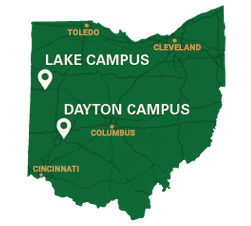
Dayton is a city in and the county seat of Montgomery County, Ohio, United States, in the southwestern part of the state. The population was 166,179 at the 2000 census. The Dayton Metropolitan Statistical Area, which includes Montgomery, Miami, Greene, and Preble counties, had a population of 835,535 in 2007. This makes Dayton the 4th largest Metropolitan Area in Ohio. Dayton is situated within the Miami Valley region of Ohio, just north of the Cincinnati metropolitan area. Dayton plays host to significant industrial, aerospace, and technological/engineering research activity and is known for the many technical innovations and inventions developed there. Much of this innovation is due in part to Wright-Patterson Air Force Base and its place within the community. The city was the home of the signing of the Dayton Peace Accords, which brought an end to the war in Bosnia. The Wright brothers, poet Paul Laurence Dunbar, and entrepreneur John H. Patterson were born in Dayton.

Source: http://en.wikipedia.org/wiki/Dayton,_Ohio

Back to top

Academics

2.1 The Raj Soin College of Business

The Raj Soin College of Business has a long tradition of developing influential business leaders in the region and beyond. http://www.wright.edu/rscob/images/seal_2__black.jpgOur program is the first in the region to be accredited by AACSB International , the highest accrediting body for four-year and post-graduate business degrees. Since 1974, we have met these high standards for faculty expertise, academic quality, research and community service. Only one out of three business programs and one out of 168 accounting programs in the nation have achieved AACSB accreditation. In 2006, our Bachelor's program became the first Ohio business school to be accredited by ABET, Inc. - The Accreditation Board for Engineering and Technology.

In 2000, the College was named the Raj Soin College of Business in honor of Rajesh K. Soin, an internationally recognized entrepreneur, business leader and community benefactor.

http://www.wright.edu/rscob/images/abet.jpg With an enrollment of approximately 1,200 undergraduate students and 450 graduate students, we offer the benefits of a comprehensive business program and a diverse student body. At the same time our small class sizes and supportive faculty offer students the individual attention they need to excel.

Through collaboration with the business community and alumni, the college continues to launch new academic programs, increase scholarship support and expand career opportunities for our students. This collaboration enriches our students’ academic experience while helping area businesses excel.

Source: http://www.wright.edu/rscob/about/

Back to top


2.2 College of Engineering and Applied Science

The College of Engineering and Computer Science is focusing its research and educational programs on preparing students to better realize the opportunities that technology now provides. Our efforts have three points of emphasis: (1) turning our students into global leaders, (2) creating new technologies in engineering and computer science, and (3) commercializing these technologies to create jobs and positively impact the evolution of technology around the world.

First, we are focusing the College's programs to position our students as global leaders in engineering and computer science by emphasizing not only technical knowledge, but also the ingenuity, innovation, leadership, and entrepreneurship required to fully reap the benefits of this technical knowledge.

Second, we are creating new technologies in engineering and computer science through our teaching and research activities.

Third, we are encouraging our students to become involved not only in the evolution of new technology, but also in the economics of this evolution. We are emphasizing commercialization of new technology in a way that will create jobs and benefit local, state, national, and international communities.

We are emphasizing quality, dedication, and the nurturing of creative talent among our faculty and students, and we are exploiting our unique, synergistic partnerships with local and regional government, the military, and commercial activities. Given the resources we have committed, and activities already ongoing, it is not surprising that the Chronicle of Higher Education has now ranked our Ph.D. faculty as fourth nationally.

Source: http://www.cs.wright.edu/cecs/aboutcollege/

Back to top


2.3 The College of Education and Human Services

The College of Education and Human Services is entering its fifth decade of service to the region, the state, and the nation and takes pride in the foundation it has laid as an institution and the difference it has made in the lives of our current and former students.

The College of Education and Human Services at Wright State University is one of 21 out of 50 teacher preparation institutions in the state of Ohio accredited by the National Council for the Accreditation of Teacher Education (NCATE). Our entire education preparation program has NCATE accreditation and full approval by the Ohio Department of Education.

The Council for the Accreditation of Counseling and Related Educational Programs (CACREP) has accredited our community counseling, school counseling, and mental health counseling programs. Our Master of Rehabilitation Counseling in severe disabilities and chemical dependency are both accredited by the Council on Rehabilitation Counseling (CORE).

Our Athletic Training Education Program (ATEP) is accredited by the Commission on Accreditation of Athletic Training Education (CAATE).

These voluntary accreditations assure our current students and our alumni that when reviewed and evaluated by external associations, our programs are considered excellent and are based on the best current available research to guide professional practice.

The College has been proud to be a member of the National Network for Educational Renewal since 1993. The Dean participates on the NNER Governing Council and Executive Committee, and meets monthly with the State University Education Dean’s Council (SUED).

Source: http://www.cehs.wright.edu/about_cehs/index.php

Back to top


2.4 College of Nursing and Health

The Wright State University-Miami Valley College of Nursing and Health is committed to excellence in nursing education. The Bachelor of Science in Nursing (BSN) program has a four-year program for pre-licensure students, a completion program specifically for registered nurse students and an accelerated post baccalaureate program (BEACON). The Master of Science in nursing (MS) program provides advanced preparation for nurses in a variety of specialty areas.

Source: http://www.wright.edu/conh/about/

Back to top


2.5 College of Science and Mathematics

The Wright State University College of Science and Mathematics (CoSM) was founded in 1964 as one of the first two colleges of the new Dayton Campus of Miami University and Ohio State University. In 1964, CoSM was known as the College of Science and Engineering; in 1985, engineering was spun off and the College of Science and Mathematics remained one of the largest colleges on campus.

Currently, CoSM offers seven undergraduate programs (including 9 majors and 8 minors), 14 graduate programs, and 3 Ph.D. programs. There are approximately 145 faculty within the college. In the Fall of 2003, there were 1538 registered students in the college (1212 undergraduate). Of the 1212 undergraduates, 762 are women. The largest departments in the college in the fall of 2003 were Biological Science and Psychology. There are approximately 145 faculty within the college. COSM has averaged over $5 million per year in externally funded research over the past 5 years.

CoSM reaches every student at WSU with one of more of its classes whether or not they are a science or mathematics major. General education requirements specify the requisite mathematics and science classes.

Source: http://www.wright.edu/cosm/collegeinfo/

Back to top


2.6 College of Liberal Arts

The vision for the College of Liberal Arts is to continue and expand the international, national, and state recognition for our exemplary students, faculty, and staff, as evidenced by our outstanding educational, research/scholarship, and professional service programs. To accomplish this vision, our mission is:

  • to provide our students with a quality general education program, and undergraduate and graduate experience;
  • to engage in creative, innovative, and applied scholarship and professional service in the region and beyond.

We pride ourselves in offering excellent teaching in the humanities, social sciences, and fine and performing arts.

Source: http://www.wright.edu/cola/index.html

Back to top


2.7 Boonshoft School of Medicine

medical student

Instead of operating a university-based hospital for clinical training, Wright State is affiliated with seven major teaching hospitals in the Greater Dayton area and has formal affiliation agreements with more than 20 other health care institutions in the Miami Valley. This model exposes medical students and resident physicians to a diverse range of patients and health care facilities. Medical educators believe that this "real world" experience is excellent preparation for medical careers in a rapidly changing health care system.

The school's academic departments include basic science departments located on the Wright State University campus and clinical departments based throughout the community. Wright State's clinical faculty teach and provide medical care for almost half a million patient visits annually. In addition to 290 full-time faculty, Wright State's voluntary faculty include approximately 1,200 physicians in private practice and other health care professionals in the community. Voluntary faculty provide an invaluable service by donating their time and expertise to the training and development of both medical students and residents.

Our innovative educational programs have made the Boonshoft School of Medicine a national leader in generalist medicine, community service, and the diversity of our student body. Our research programs are distinguished by interdisciplinary teamwork and community collaboration and include nationally recognized centers of excellence in genomics, toxicology, neuroscience, substance abuse and treatment, and human growth and development.Source: http://www.med.wright.edu/about/

Back to top


2.8 The School of Professional Psychology

The School of Professional Psychology (SOPP) is among the first university-based professional school programs to be founded in the country and has been in existence for over 25 years.  Being university based, the SOPP has the academic supports and facilities available in a modern university.  It has been fully accredited at the highest level of accreditation since its early days and recently received the maximum reaccreditation of seven years from the APA Committee on Accreditation.

A program with...

  • High retention and graduation rates (95%)
  • High internship acceptance rates (nearly 100% compared to 68% nationally)
  • High licensure exam passage rates (92% on 1st try, close to 100% overall)

We recently received the results of internship match rates by doctoral program over a seven-year period from 2000–2006 supplied by APPIC.  The overall match rate was 74.9% nationally. The SOPP's rate was 93.2% which ranked number one among US professional schools of psychology and in the top 25 among all U.S. clinical psychology doctoral programs.

·         Over ½ of our faculty hold board certification from the prestigious American Board of Professional Psychology

·         The SOPP has a reputation for community service.

·         95% of our graduates report being pleased with their training at SOPP and  95% are satisfied with their chosen field.

·         Nearly 100% of our graduates are employed!

·         The SOPP is one of the few programs in the country that has both an APA-accreditedinternship program as well as a postdoctoral residency training program to go with its predoctoral program.  Nationally 20% of students did not match when they applied for internship this past year, 100% of SOPP students got internship placements.

Note: The SOPP has separate admission procedures. To apply, please visit http://www.wright.edu/sopp/apply/

Source: http://www.wright.edu/sopp/students/

Back to top

Admission
Undergraduate Level


3.1 International Undergraduate Admissions

To be considered for undergraduate admission to Wright State University, an international student must have earned a certificate of completion of secondary education that would enable the student to be admitted to a university in his or her home country. Students should have studied mathematics and science subjects at the secondary level.

Back to top


3.2 Programs of Study (Majors)

    *  Accountancy

    * Acting

    * Acting, Musical Theatre

    * African and African American Studies

    * Anthropology

    * Art

    * Art History

    * Art History/Art Studio

    * Athletic Training

    * Biological Sciences

    * Biological Sciences Education**

      - Life Sciences**

      - Life Sciences/Chemistry**

    * Biomedical Engineering

    * Business Economics

    * Career and Technical Education

    * Chemistry

    * Chemistry Education

    * Classical Humanities

    * Clinical Laboratory Science

    * Communication Studies

    * Computer Engineering

    * Computer Science

    * Criminal Justice

    * Dance

    * Early Childhood Education

       (Pre K-3, Ages 3-8)

    * Earth & Environmental Sciences

    * Earth and Environmental Sciences Education**

    * Economics

    * Electrical Engineering

    * Engineering Physics

    * English

    * Finance

    * Financial Services

    * French

    * Geography

    * German

    * Greek*

    * Health & Physical Education

       (Multi-Age, Pre-K-12, Ages 3-21)

    * History

    * Human Resource Management

    * Industrial & Systems Engineering

    * Integrated Language Arts/English Education**

    * Integrated Sciences Education**

    * International Business

    * International Studies             


    * Latin*

    * Liberal Studies

    * Management

    * Management Information Systems

    * Marketing

    * Mass Communication

    * Materials Science & Engineering

    * Mathematics

    * Mathematics Education

    * Mechanical Engineering

    * Middle Childhood Education

       (Grades 4-9, Ages 8-14)**

    * Modern Languages

    * Modern Languages Education

       (French and Spanish)**

    * Motion Picture History, Theory, & Criticism

    * Motion Picture Production

    * Music

    * Music Education

      (Multi-Age, Pre-K-12, Ages 3-21)

    * Music History & Literature

    * Music Performance

    * Nursing

    * Operations Management

    * Organizational Communication

    * Organizational Leadership

    * Philosophy

    * Physics

    * Physics Education**

      - Earth Sciences/Physics**

      - Life Sciences/Physics**

      - Physical Sciences Education**

    * Political Science

    * Psychology

    * Rehabilitation Services

    * Religion

    * Selected Studies

    * Sign Language Interpreter ***

    * Social Sciences Education**

    * Social Work

    * Sociology

    * Spanish

    * Statistics

    * Theatre Design/Technology/Stage Management

    * Theatre Studies

    * Urban Affairs

    * Visual Arts Education**

    * Women's Studies

* Offered by Department of Classics
** Graduate degree required for teaching licensure
*** Completion Program

Source: http://www.wright.edu/majors/

Back to top


3.3 Deadlines

Wright State University has a rolling admissions policy. This system allows applicants who qualify for admission but who have not submitted their documents with enough processing time to be admitted for their desired quarter to be admitted for a subsequent quarter.

Students applying from outside the United States must submit all documents six months prior to the first day of classes for the quarter in which they wish to enroll. Those within the United States should submit documents four months prior. Only applicants who have submitted completed application materials with all supporting documents and test results will be considered for admission to the desired quarter.

BEGINNING OF QUARTER:

Winter Quarter

:

Beginning January

Spring Quarter

:

End of March

Summer Quarter

:

Mid June

Fall Quarter

:

Beginning of September

 Source: http://www.wright.edu/ucie/admissions/undergraduate_admissions.html

Back to top


3.4 Undergraduate Application Information (Checklist)

ATTENTION: Please submit a photocopy of your passport information page with the application!

The following items are required for undergraduate admission:

  • International Student Application Form, If you apply online, DO NOT fill out another application form but send the "confirmation of the application"
  • A nonrefundable $30 application fee.
  • A complete, official academic record from each secondary school, college, and university previously attended. If an original transcript or mark sheet is difficult to replace, a copy or certified by the school principal, the registrar or controller of examination will be acceptable. A certified English translation must be attached to official foreign transcripts or mark sheets.

·         Students who are applying as transfer students from a foreign college or university should submit, in English, a descriptive syllabus of courses they have taken.

·         The official results of the Test of English as a Foreign Language (TOEFL). The acceptable minimum score is 173(CBT) or 61/120 (IBT). Some departments have higher requirements. The College of Engineering and Computer Science requires 197(CBT) or 71/120(IBT).You may also submit the official result of the International English Language Testing System (IELTS) with a minimum score of band. Please be advised that the examinee's copies and photo-static copies are not acceptable. To meet minimum English requirements you may also complete level 4 of Wright State University ESL program, LEAP

·         Evidence of sufficient financial resources to support the student through the first year of studies (financial statement form, current official bank statement in US dollars). See the financial requirements page for more information.

·         Photocopy of passport page showing Photo, Name and Birth Date.

NOTE: Applicants coming directly out of secondary school applying for Fall quarter may be eligible for a scholarship if application is completed by February 15 and two out of three requirements below are met:

  • Applicant submits SAT (1140 or higher) or ACT (25 or higher) scores.
  • Applicant’s GPA is 3.25 or higher
  • Applicant is ranked among the top 10% of his graduating class

 All documents become the property of Wright State University and cannot be returned to the applicant, photocopied, or forwarded to another institution.

Source: http://www.wright.edu/ucie/admissions/undergraduate_admissions.html

Back to top


3.5 Transfer Credits

Credit for undergraduate work completed at an accredited college or university is often given to transfer students. However, most departments do not grant transfer credit for upper-division courses taught at international colleges and universities. Students must have demonstrated above-average academic performance before admission to Wright State University can be considered. It is recommended that the student bring a detailed syllabus of courses to assist in evaluating the amount of transfer credit. Credit for English composition is usually not given.

Source: http://www.wright.edu/ucie/admissions/undergraduate_admissions.html

Back to top


3.6 Admission Process

When the Office of International Admissions (UCIE) receives an application, the process is as follows:

  • Application packet is sent to the Office of Undergraduate Admissions to upload the application onto the mainframe
  • Applicant’s file is sent back to the UCIE to start application process
  • Acknowledgement of receipt is sent to applicant via email
  • Documents in the file are reviewed, GPA calculated, credentials evaluated and a  decision made
  • Decision is communicated to the applicant via email and followed up by mailed admission packet.

The above described process may take up to 2 months. If upon reviewing the application the admissions officer requires  more information the candidate will be notified via email.

Source: http://www.wright.edu/ucie/admissions/undergraduate_admissions.html

Back to top


3.7 Decision and Notification

All required documents must be completed and on file before an admission decision will be made. Inquiries about the status of an application are answered only to the applicant through email at uciestatus@wright.edu with the ID number in the subject header. This ID number will provided to the student via email only after the application has been uploaded onto the mainframe.

Source: http://www.wright.edu/ucie/admissions/undergraduate_admissions.html

Back to top


 3.8 Intensive English Program

Wright State University offers an Intensive English Program for international students. LEAP provides classes in which students study English as a second language. In the LEAP program, international students learn the language skills necessary for both the academic and the professional worlds. The LEAP curriculum focuses on developing all of the language skills needed to prepare students for college or employment in the U.S. Our program consists of four levels. Students can start their training at the elementary level and progress to an advanced, college ready level. Students may be able to begin the LEAP program at a higher level based on their placement evaluation results.

  • Elementary level: Fundamental English for basic communication.
  • Low Intermediate: Introduction to academic reading and writing with grammar support, as well as an emphasis on speaking and listening skills.
  • High Intermediate: Continued work with academic reading and writing , grammar and speaking and listening.
  • Advanced Bridge Level: Advanced preparation in reading, writing, speaking and listening for university or business purposes. Students at this level are entitled to take university classes for college credit. Successful completion  of the Bridge level stands in place of a TOEFL score for admission to Wright State University (*) Advantages of our curriculum: Small classes, qualified teachers, regular meetings with writing tutors, conversation partners, field trips and much more.

Click here for LEAP Program Information

Source: http://www.wright.edu/ucie/admissions/undergraduate_admissions.html

Back to top


Graduate Level

4.1 International Graduate Admission

Wright State welcomes applications from qualified international students. Approximately 650 students on F-1 and J-1 student visas currently attend the university. For a list of graduate programs, please visit: http://www.wright.edu/sogs/prog_college.html

Back to top


4.2 Graduate Programs

Raj Soin College of Business

Accountancy
Business Administration
Information Systems
Logistics and Supply Chain Management
Social and Applied Economics

M.B.A. and M.S. in Administration of Nursing and Health Care Systems

College of Education and Human Services

Classroom Teacher:
  Advanced Studies
  Career and Technical Education: Teacher Licensure
  Computer/Technology Education
  Library/Media
  Multi - Age
  Early Childhood
  Adolescent Young Adult
  Middle Childhood

Educational Leadership:
  Curriculum and Instruction/Teacher Leader
  Leadership Development
  Principalship
  Student Affairs in Higher Education - Administration

Educational Administrative Specialist:
  Curriculum, Instruction, and Professional Development
  Curriculum, Instruction, and Professional Development - Technology

Intervention Specialist:
  Early Childhood
  Mild to Moderate Educational Needs
  Moderate to Intensive Educational Needs

Licensure Candidate (C)
Classroom Teacher:
  Alternative Licensure
  Career and Technical Education: Teacher Licensure
  Computer/Technology Education Endorsement
  Early Childhood Education
  Library/Media
  Reading Endorsement
  Multi - Age
  Adolescent Young Adult
  Middle Childhood

Intervention Specialist:
  Early Childhood Intervention Specialist
  Gifted Educational Needs
  Mild to Moderate Educational Needs
  Moderate to Intensive Educational Needs
  Pre-kindergarten Endorsement

Educational Administrative Specialist:
  Curriculum, Instruction, and Professional Development
  Curriculum, Instruction, and Professional Development - Technology

Educational Leadership:
  Principal
  Superintendent

Professional Pupil Services:
  School Nurse
  TESOL Endorsement

Pupil Personnel Services:
  School Counseling

Counseling:
  Business and Organizational Management
  Community Counseling
  Exceptional Children
  Marriage and Family
  Mental Health Counseling

Rehabilitation Counseling:
  Chemical Dependency
  Severe Disabilities
  Severe Disabilities (Distance Learning)

College of Engineering and Computer Science

Computer Science and Engineering (Ph.D.)
Engineering (Ph.D.)

Biomedical Engineering
Computer Engineering
Computer Science
Electrical Engineering
Engineering Innovation and Entrepreneurship
Industrial and Human Factors Engineering
Materials Science and Engineering
Mechanical Engineering
Renewable and Clean Energy

College of Liberal Arts

Applied Behavioral Science: Criminal Justice and Social Problems
English
Teaching English to Speakers of Other Languages (TESOL)
History
Humanities
International and Comparitive Politics
Music
Public Administration

College of Nursing and Health

Nursing:

Nursing Practice (DNP)

Acute Care Nurse Practitioner
Administration of Nursing and Health Care Systems
Adult Health
Child and Adolescent Health
Clinical Nurse Leader
Community Health
Family Nurse Practitioner
School Nurse
  
M.S. and M.B.A. in Administration of Nursing and Health Care Systems

College of Science and Mathematics

Biomedical Sciences (Ph.D.)
Environmental Sciences (Ph.D.)
Human Factors and Industrial/Organizational Psychology (Ph.D.)

Anatomy
Applied Mathematics
Applied Statistics
Biochemistry and Molecular Biology
Biological Sciences
Chemistry
Environmental Sciences
Human Factors and Industrial/Organizational Psychology
Mathematics
Microbiology and Immunology
Physics
Physiology and Neuroscience

Master of Science in Teaching
Earth Science
Interdisciplinary Science and Mathematics
Physics

School of Medicine

Aerospace Medicine
Pharmacology and Toxicology
Public Health

Back to top


4.3 Deadlines

Wright State University has a rolling admissions policy. This system allows applicants who qualify for admission but who have not submited their documents with enough processing time to be admitted for their desired quarter to be admitted for a subsequent quarter.

Students applying from outside the United States must submit all documents six months prior to the first day of classes for the quarter in which they wish to enroll. Those within the United States should submit documents four months prior. Only applicants who have submitted completed application materials with all supporting documents and test results will be considered for admission to the desired quarter

BEGINNING OF QUARTER:

Winter Quarter

:

Beginning January

Spring Quarter

:

End of March

Summer Quarter

:

Mid June

Fall Quarter

:

Beginning of September

Source: http://www.wright.edu/ucie/admissions/graduate_admission.html

Back to top


4.4 Admission Criteria

An applicant who has completed a four-year bachelor's degree is eligible for admission to the School of Graduate Studies. If an applicant is from Bangladesh, Burma, India, Nepal, Pakistan, or Sri Lanka and has earned a 3-year bachelor's degree in arts, commerce, or science, he or she is eligible for admission to an undergraduate program only. However, applicants from those six countries who have earned a master's degree in arts, commerce, or science may apply for admission to the School of Graduate Studies. Students who have received a degree in the Third or Pass Division will not be considered for admission.

Graduate international applicants are expected to meet the following criteria for admission:

·         Have earned a 4-year baccalaureate degree or its equivalent from an accredited college, university, or other institution of higher learning. Only an official transcript accompanied by attested translation into English (if needed) will be accepted as evidence of academic preparation. If the credentials cannot be evaluated by the Office of International Admissions, the applicant will be required to submit the credentials to an evaluation service and pay the cost of the evaluation.

·         Demonstrated proficiency in English. If the applicant's native language is not English, a minimum score of 213(CBT) or 79/120(IBT) on the Test of English as a Foreign Language (TOEFL) is required or a band 6 through the International English Language Testing System (IELTS). Several departments or programs have set higher requirements for English proficiency. In addition, international students may be required by their academic advisors to take a university-administered English writing placement test. Students failing this test may be required to take supplemental on-campus classes to strengthen their English skills. Students who have earned a degree from a regionally accredited US college or university are exempted from the TOEFL requirement.

Source: http://www.wright.edu/ucie/admissions/graduate_admission.html

Back to top


4.5 Graduate and Professional Degree Programs

Most students who have earned a bachelor's degree may apply for admission to a graduate or professional degree program at Wright State (See the admission requirements checklist). Master's degree programs are usually earned in two years of full-time study, but some students may complete requirements in one year. Wright State offers a two-year post-master's Educational Specialist (Ed.S.) Degree Program in educational leadership and a Doctor of Education (Ed.D.) degree. The doctorate is the highest degree awarded in the United States and usually requires a minimum of three years of studies beyond completion of the bachelor's and master's degrees.

Source: http://www.wright.edu/ucie/admissions/graduate_admission.html

Back to top


4.6 Graduate Application Checklist

ATTENTION:
Please submit a photocopy of your passport information page with the application. Please do not send documents in small sealed envelopes.  This will delay processing!

·         The following items are required for graduate admissions to Wright State:

  • Graduate Student Application Form. Please write your name on application exactly as it appears on your passport ! If you apply online, DO NOT fill out another application form but send the "confirmation of the application"
  • A nonrefundable $25 application fee. No processing of the application will be done until the fee is paid
  • A complete, official academic record from each college, or university previously attended.  A certified English translation must be attached to official foreign transcripts or mark sheets
  • Official confirmation of a bachelor's degree
  • Official results of the Test of English as a Foreign Language (TOEFL) score of minimum 213 (CBT)/ 79(IBT)   or the International English Language Testing System (IELTS) scores (minimum band 6)
  • Official GMAT  or GRE tests (if required for the program)
  • Letters of recommendations (if required for the program)
  • Bank Statement (min:-enough to support student through one year of studies)
  • Statement of Objectives (if required by program)

·         Photocopy of passport page showing photo, name and birth date

Note: If the applicant is being sponsored, the financial statement form must be accompanied by an affidavit of support and a bank statement provided by the sponsor, indicating the amount of money available to the applicant for the purpose of studying at Wright State University. If the applicant has been offered a graduate assistantship or fellowship, the department must submit a letter indicating the conditions of the offer and the dollar amount the student will receive in addition to tuition remission.

Form I-20 will be issued by WSU when the applicant has met the above requirements and has been admitted to the university. Additional information about Admission and Registration is available at

School of Graduate Studies

Applications and supporting documents should be sent to:

School of Graduate Studies
Wright State University
E344 Student Union
3640 Colonel Glenn Hwy.
Dayton OH, 45435
U.S.A

Source: http://www.wright.edu/ucie/admissions/graduate_admission.html

Back to top

4.7 Admission Process

  1. Applicant’s information is loaded in data base and file is forwarded to Office of International Admissions
  2. After applicants mail their full set of completed application materials the documents are reviewed and prepared for departmental evaluation
  3. File is sent to department for admission decision (email is sent to applicant)
  4. File is returned to International Admissions Office with admission decision
  5. If department is offering admission, I-20 and admission letter are requested and mailed (email is sent to applicant with SEVIS number for visa appointment)

The time needed for the above described process will depend on the volume of applications received. At a minimum, applicants should expect a wait of about one month before receiving an email from us. All required documents must be completed and on file before an admission decision will be made.

Inquiries about the status of an application are answered only to the applicant through email at uciestatus@wright.edu  with the ID number in the subject header. This ID number will be provided by email to the student only after the application has been uploaded onto the mainframe. 

Application Status inquiries will ONLY receive a reply if emailed to uciestatus@wright.edu

Source: http://www.wright.edu/ucie/admissions/graduate_admission.html

Back to top


APPENDICES

Appendix A: Calendar

2009-2010 Academic Calendar
Fall Quarter 2009

September 8, Tuesday

First Day of Fall Quarter Classes (Labor Day is Monday, September 7, University Closed)

September 28, Monday

Last Day for All Students to Drop a Class Without a Grade

October 26, Monday

Last Day for All Students to Drop a Class With a Grade of W

November 11, Wednesday

Veteran's Day Holiday (University Closed)

November 14, Saturday

Last Day of Fall Quarter Classes

November 16-21, Mon. - Sat.

Final Examinations

November 21, Saturday

Fall Commencement


Mon.

Tue.

Wed.

Thur.

Fri.

Sat.

Class Meeting Days

9

10

9

10

10

10

Final Examination Days

1

1

1

1

1

1


Winter Quarter 2010

January 4, Monday

First day of Winter Quarter Classes

January 18, Monday

Martin Luther King, Jr. Holiday (University Closed)

January 22, Friday

Last Day for All Students to Drop a Class Without a Grade

February 19, Friday

Last Day for All Students to Drop a Class With a Grade of W

March 13, Saturday

Last Day of Winter Quarter Classes

March 15-20, Mon. - Sat.

Final Examinations


Mon.

Tue.

Wed.

Thur.

Fri.

Sat.

Class Meeting Days

9

10

10

10

10

10

Final Examination Days

1

1

1

1

1

1


Spring Quarter 2010

March 29, Monday

First Day of Spring Quarter Classes

April 16, Friday

Last Day for All Students to Drop a Class Without a Grade

May 14, Friday

Last Day for All Students to Drop a Class With a Grade of W

May 31, Monday

Memorial Day Holiday (University Closed)

June 5, Saturday

Last Day of Spring Quarter Classes

June 7-12, Mon. - Sat.

Final Examinations

June 12, Saturday

Spring Commencement


Mon.

Tue.

Wed.

Thur.

Fri.

Sat.

Class Meeting Days

9

10

10

10

10

10

Final Examination Days

1

1

1

1

1

1


Summer Quarter 2010

June 14, Monday

First Day of A and C Term Classes

June 23, Wednesday

Last Day for All Students to Drop an A Term Class Without a Grade

July 2, Friday

Last Day for All Students to Drop a C Term Class Without a Grade

July 5, Monday

Independence Day Holiday Observed (University Closed)

July 6, Tuesday

Last Day for All Students to Drop an A Term Class With a Grade of W

July 15, Thursday

Last Day of A Term Classes

July 19, Monday

First Day of B Term Classes

July 28, Wednesday

Last Day for All Students to Drop a B Term Class Without a Grade

July 30, Friday

Last Day for All Students to Drop a C Term Class With a Grade of W

August 10, Tuesday

Last Day for All Students to Drop a B Term Class With a Grade of W

August 19, Thursday

Last Day of B and C Term Classes

August 21-22, Sat. - Sun.

Campus Electrical Power Shutdown


Mon.

Tue.

Wed.

Thur.

Fri.

Sat.

Class Meeting Days, A Term

4

5

5

5

4

4

Class Meeting Days, B Term

5

5

5

5

4

4

Class Meeting Days, C Term

9

10

10

10

9

9


For classes that start at 4:00 p.m. or later and a class day is missed because of the academic calendar, the faculty have the option of meeting the class on the third Friday of the term in the same classroom and hour as originally scheduled. This meeting must be noted in the syllabus.

Back to top


Appendix B: Tuition, Fees, Living Expenses

The costs listed below are an estimate. Tuition cost is updated once a year in June.

"All students with disabilities must contact the UCIE to review possible additional expenses"

UNDERGRADUATE

GRADUATE

3 Quarters (Based on 13 Hours)

3 Quarters (Based on 8 Hours)

Tuition

$4668/Quarter

Tuition

$4056/Quarter

International Fee

$52/Quarter

International Fee

$52/Quarter

Legal Services

$6/Quarter

Legal Services

$6/Quarter

Lab fees

$85/Quarter

Lab fees

$100/Quarter

Total Tuition and Fees

$4811/Quarter

Total Tuition and Fees

$4214/Quarter

$14,433

$12,642

Living Expenses (see Table 1.1 below)

$9,060

Living Expenses

$9,060

Books & Health Ins.

$1,960

Books & Health Ins.

$1,960

Total

$25,453

Total

$23,662

LEAP PROGRAM

Per Quarter

Per 2 Quarters

Per 3 Quarters

Tuition

$2,375

$4,750

$7,125

Living Expenses

$3,403

$7,228

$9,060

Books & Health Ins.

$500

$1,000

$1,600

Total

 $6,278

 $12,978

 $17,785

LENGTH OF STUDY

60 months - 5 Years (First Bachelors)

24 months - 2  Years (Masters)

24 months - 2 Years (Second Bachelors)

60 months - 5 Years (PhD)

ADDITIONAL FAMILY EXPENSES

Child

$ 2,150

Spouse

$ 3,150

Both

$ 5,150

(Health Insurance Fees added to the above Fees and are subject to change when new premium rates are available)

Per Quarter

Per Year

Spouse

$474

$2,297

Child (Each)

$306

$1,480

2008–2009 CAMPUS HOUSING RATES
These rates are subject to change.
3 Quarter Campus Communities - Academic Year Agreement

Campus Community

Room Type

Campus Community

Room Type

Room Rate

Quarterly Res. Act. Fee

Board Rate

Quarterly Comm. Fee

Quarterly Cost

Cost for entire year (3 Quarters)

Hamilton Hall

Double

$1,547.00

$30.00

$855.00

$130.50

$2562.50

$7687.50

Triple

$1,434.00

$30.00

$855.00

$110.00

$2429.00

$7287.00

The Woods

Single

$1,788.00

$30.00

$855.00

$192.00

$2865.00

$8595.00

Double

$1,563.00

$30.00

$855.00

$130.50

$2578.50

$7735.50

Triple

$1,514.00

$30.00

$855.00

$110.00

$2509.00

$7527.00

Quad

$1,368.00

$30.00

$855.00

$99.75

$2352.75

$7058.25

Honors

Double

$1,633.00

$30.00

$855.00

$130.50

$2648.50

$7945.50

Forest Lane

Quad

$1,619.00

$30.00

not required

$99.75

$1,748.75

$5,246.25

Studio

$1,964.00

$30.00

not required

$130.50

$2,124.50

$6,373.50

Sm. 2 Bedroom

$2,055.00

$30.00

not required

$130.50

$2,215.50

$6,646.50

Lg. 2 Bedroom

$2,323.00

$30.00

not required

$130.50

$2,483.50

$7,450.50

College Park

Quad

$1,909.00

$30.00

not required

$114.00

$2,053.00

$6,159.00

University Park

Quad

$2,015.00

$30.00

not required

$114.00

$2,159.00

$6,477.00

4 Quarter Agreement*

Campus Community

Room Type

Room Rate

Quarterly Res. Act. Fee

Board Rate

Quarterly Comm. Fee

Quarterly Cost

Cost for entire year (3 Quarters)

Village***

Efficiency

$1,805.00

$30.00

not required

$192.00

$2,027.00

$8,108.00

Deluxe Efficiency

$2,062.00

$30.00

not required

$192.00

$2,284.00

$9,136.00

One Bedroom

$2,342.00

$30.00

not required

$192.00

$2,564.00

$10,256.00

Two Bedroom

$2,664.00

$30.00

not required

$192.00

$2,886.00

$11,544.00

SUMMER RATES - are established in April * The Village offers four-quarter (fall through summer) contracts only to both returning and new incoming eligible students. ** Rates for Technology and Board are provided by Telecommunications and Sodexho and are listed herein as a courtesy. *** Maximum occupancy allowed by law for: Efficiency and Deluxe is 1 adult, 1 infant (under 1 year old); One Bedroom is 2 adults, 1 infant (under 1 year old); Two Bedroom is 4 adults, 1 infant (under 1 year old).

Off Campus Housing

Off-campus housing is arranged solely by the student; WSU does not administer off-campus housing. If you decide to live off-campus, you may wish to consider purchasing a car. For a list of off-campus housing options, please visit:

http://www.wright.edu/ucie/students/housing.html

Off Campus Apartments

Room Type

Monthly Rent

Monthly Utilities

Monthly Food Cost

Total

Village***

Varies

$200 - 800

$60-100

$200-300

$460-1200

First Year

Following Years

Price of used car

$3000 and up

-

Ohio sales tax

$195 (6.5% of purchase price)

-

Auto license

$45

$45

Fuel and maintenance

$1200

$1200

Insurance (mandatory)

$1000

$1000

How much money should I bring for the first academic quarter of study?

The answer to this question could vary according to whether or not your home country has any restrictions on foreign currency exchange. However, here are some tips you may use as a guideline:

  • The dollar amount printed on line 7 (where it says total), divide that amount by 3, and that is the minimum recommended funds that you should bring your first quarter.
  • We recommend you bring to the United States the dollar figure that is the result of your calculations. Further, we recommend that you bring a minimum of $300 cash to take care of miscellaneous expenses in transit.
  • You may wish to bring the university tuition and fees in the form of a bank draft payable to Wright State University. Finally, for the remaining funds (living expenses) it may be prudent to bring them in a combination of approximately $1000 in the form of traveler’s checks and the remainder in the form of a bank draft in your name to deposit when you open a bank account here.

Wright State cannot issue a formal admission letter, Form I-20 or DS-2019, to an applicant until the following financial requirements have been satisfied.

International students are required by the The Bureau of Citizenship and Immigration Services to show adequate proof of their ability to support themselves and any family members they wish to accompany them during their studies in the United States. Each institution of higher learning is required to have on file proof of the student's ability to pay. It is illegal for international students to work off campus during the first year of their stay in the United States. However, many international students are able to secure part-time on-campus student employment positions. Although F-1 students may be permitted to work on campus, F-2 spouses are strictly prohibited from accepting employment in the United States. The university cannot and will not assume financial responsibility for international students.

To satisfy the financial requirements, applicants must complete and return the financial statement form with their application form. Graduate applicants must note on the financial statement form if they are applying for an assistantship or fellowship.

If an applicant is self-sponsored or family-sponsored, he or she must submit an official bank statement or a letter from the sponsor's employer, translated into U.S. dollars, showing sufficient funds to support the student's first year of study.

If an applicant is sponsored by a government, agency, or organization, he or she must submit an official award letter addressed to Wright State. The letter must state in U.S. dollars the amount awarded annually and provide complete billing instructions.

Normally, applicants will need documentation to prove to U.S. consulate officials that they have sufficient funds and should retain official copies of all financial documents for this purpose. Students from certain countries encounter difficulties in transferring funds from their country to the United States; therefore, it is important for students to be familiar with home government money exchange regulations to ensure the necessary funds are available at the beginning of each quarter and at regular intervals throughout their stay in the United States. Students should plan to bring enough money to the United States to cover initial university fees and living costs until their home government releases additional funds for anticipated expenses for the first academic or calendar year.

Source: http://www.wright.edu/ucie/students/tuition.html

Back to top


Appendix C: Directory of Offices and Services

Bookstore E182 Student Union 775-5600 775-5615

Bursar E236 Student Union 775-5650 775-5775

Financial Aid E136 Student Union 775-5721 775-5795

Registrar E244 Student Union 775-5588 775-5597

Back to top

3640 Colonel Glenn Highway - Dayton, Ohio - 45435

Copyright Information © 2009 | Accessibility Information
Last updated: Thu. Aug-27-09, 15:52
Please send comments to: webmaster@wright.edu

Wright State University