
Thomas L. Brown, PhD
Education History
Van Wert High School, 1981
The Ohio State University, B.S., Biochemistry, 1986
University of Cincinnati, Developmental Biology, Ph.D., 1993
Postgraduate Research
The Cleveland Clinic Foundation, Lerner Research Institute, DepArtment of Cell Biology
Cincinnati Children's Research Foundation, Division of Development Biology
University of Cincinnati College of Medicine, Department of Environmental Health
Research Statement
BROWN LAB RESEARCH INTERESTS
Oxygen Regulation, Placental Differentiation, and Pregnancy Associated Disorders
The placenta is essential for survival of the embryo and developing baby. Many pregnancy-associated disorders (such as preeclampsia and fetal growth restriction) occur due to abnormal placental development.
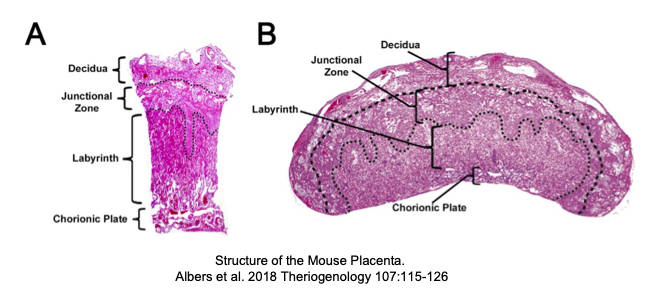
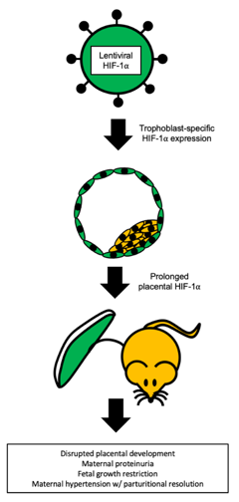
Babies born from these pregnancies are at increased risk of hypertension, cardiovascular diseases, and stroke later in life. The embryo develops in very low levels of oxygen and the placenta differentiates as oxygen levels rise to maternal levels at the end of the first trimester. The response to changes in placental oxygen levels are mediated by the master oxygen sensor, hypoxia inducible factor 1 alpha (HIF-1a). Prolonged levels of placental HIF-1a, beyond the first trimester, are strongly associated with preeclampsia in humans (Gultice et al., 2009, Biol.Reprod. 80:184-193; Albers et al., 2019, Scientific Reports 9:2742).
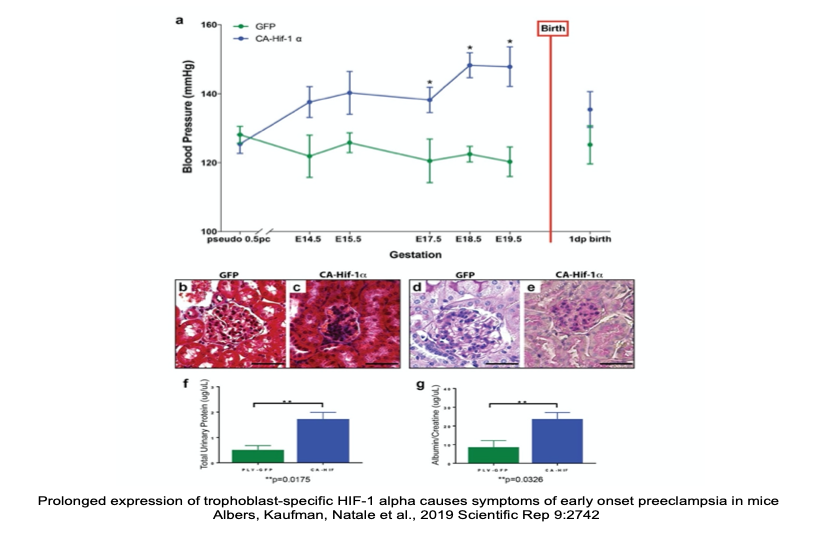
We are using state of the art, placenta-specific genetic manipulation to investigate placental development and the pathophysiology of preeclampsia and other pregnancy-associated disorders (Kaufman et al., 2014, Theriogenology 82:1043-1048; Albers et al., 2019, Scientific Reports 9:2742; Vaughan et al., 2021 Clinical Science 135:2049-2066; Waker et al., 2021, Frontiers in Physiology. 12:681632 )
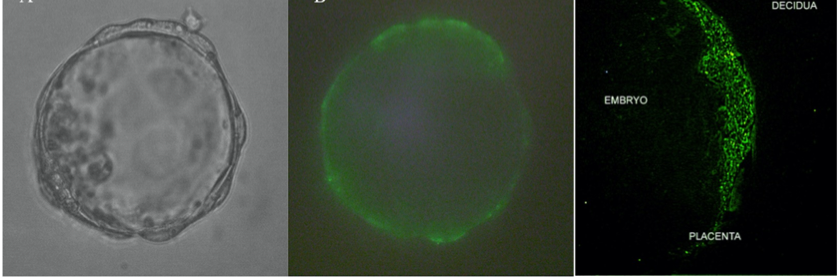
We are also using highly novel, cell-specific nanoparticles for targeted therapy of preeclampsia and other disorders
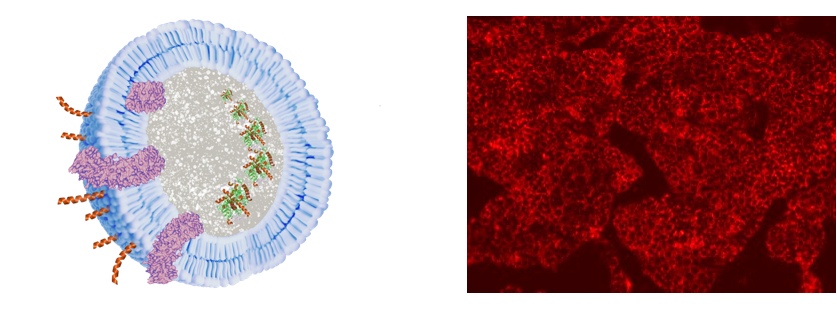
Our understanding of the molecular and cellular events that control trophoblast differentiation and placental development will contribute to future treatments for pregnancy associated disorders.
Cancer - Overcoming Tumor Resistance - In the early stages of cancer, tumorigenic cells routinely undergo physiologic cell death as a normal means to control its spread; however, over time cancer cells can often become resistant to the normal induction of apoptosis. Examining how to sensitize chemotherapeutic resistance may lead to new insights in the fight against cancer (Waker et al., 2018 Neuro-Oncology 20, Issue Suppl2 pi62-63; Wicker et al., 2009 Cancer Growth and Metastasis 2:45-55).
Cell Death (Apoptosis) - Apoptosis is an evolutionarily-conserved, normal physiologic process that occurs to maintain homeostasis. The majority of human diseases have an altered cell death program that can result in too much (autoimmune, neurological disorders) or to little cell death (cancer). We are looking at therapeutics designed to specifically control the apoptosis process (Keoni et al., 2015 J. Cell Death 2015:8; Caserta et al., 2003, Apoptosis 8:345-352).
Publications
Rosario FJ, Urschitz J , Powell TL, Brown TL, Jansson T. Overexpression of the LAT1 in primary human trophoblast cells increases the uptake of essential amino acids and activates mTOR signaling. (2023) Clinical Science 137(21):1651-1664 DOI: 10.1042/CS20230490
Shah EJ, Grunwald WC, Garrett TL, Brown TL, and Cool DR. Sarin-Induced Neuroinflammation in Mouse Brain is Attenuated by a Broad Spectrum Caspase Inhibitor Q-VD-OPh. (2023) The Journal of pharmacology and experimental therapeutics, JPET-AR-2023-001820. Advance online publication. https://doi.org/10.1124/jpet.123.001820
Ackerman Iv, W. E., Buhimschi, C. S., Brown, T. L., Zhao, G., Summerfield, T. L., & Buhimschi, I. A. (2023). Transcriptomics-Based Subphenotyping of the Human Placenta Enabled by Weighted Correlation Network Analysis in Early-Onset Preeclampsia With and Without Fetal Growth Restriction. Hypertension (Dallas, Tex. : 1979), 10.1161/HYPERTENSIONAHA.122.20807. Advance online publication. https://doi.org/10.1161/HYPERTENSIONAHA.122.20807
Waker CA, Hwang AE, Bowman-Gibson S, Chandiramani CH, Linkous B, Stone ML, Keoni CI, Kaufman MR, and Brown TL. (2023) Mouse Models of Preeclampsia with Preexisting Comorbidities. Frontiers in Physiology – Sec. Clinical and Translational Physiology. Volume 14 - 2023 | https://doi.org/10.3389/fphys.2023.1137058
Cox, C. B., Castro, M., Brown, T. L., & Bigley, N. J. (2022). IL-10 and TGF-β Increase Connexin-43 Expression and Membrane Potential of HL-1 Cardiomyocytes Coupled with RAW 264.7 Macrophages. ImmunoHorizons, 6(6), 334–343. https://doi.org/10.4049/immunohorizons.2100104
Vaughan OR, Maksym K, Silva E, Barentsen K, Anthony RV, Brown TL, Hillman SL, Spencer R, David AL, Rosario FJ, Powell TL, and Jansson T. Placenta-specific Slc38a2/SNAT2 knockdown causes fetal growth restriction in mice. (2021) Accepted. Clinical Science (Lond) CS20210575 https://doi.org/10.1042/CS20210575
Waker, C. A., Kaufman, M. R., & Brown, T. L. (2021). Current State of Preeclampsia Mouse Models: Approaches, Relevance, and Standardization. Frontiers in physiology, 12, 681632. https://doi.org/10.3389/fphys.2021.681632
Albers RE, Kaufman MR, Natale BV, Keoni C, Kulkarni-Datar K, Min S, Williams CR, Natale DRC, and Brown TL. Trophoblast-Specific Expression of Hif-1α Results in Preeclampsia-Like Symptoms and Fetal Growth Restriction (2019) Scientific Reports 9:2742 https://doi.org/10.1038/s41598-019-39426-5
Albers RE, Selesniemi K, Natale DRC, and Brown TL. TGF-β induces Smad2 Phosphorylation, ARE Induction, and Trophoblast Differentiation. (2018) International Journal of Stem Cells. 30:111-120
Waker CA, Keoni C, Schurko C, Brown TL, and Lober R. Hypoxia-inducible factors regulate diffuse intrinsic pontine glioma growth in normoxic culture. (2018) Neuro-Oncology, Volume 20, Issue suppl2 pi62–i63.
Albers RE, Waker CA, Keoni C, Kaufman MR, Bottomley MA, Min S, Natale DR, and Brown TL. Gestational Differences in Murine Placenta: Glycolytic Metabolism and Pregnancy Parameters. (2018) Theriogenology 107:115-126
Severt BR, Kraszpulska B, and Brown TL. Establishment of an Interactive Community Outreach program in Human Anatomy and Physiology:The HAPI Lab Model. (2017) HAPS Educator 17:101-105
Waker CA, Albers RE, Pye RL, Doliboa SR, Wyatt CN, Brown TL, and Mayes DA. AMPK knockdown in Placental Labyrinthine Progenitor Cells Results in Restriction of Critical Energy Resources and Altered Differentiation. (2017) Stem Cell and Development 26 (11):808-817
Kaufman MR and Brown TL. AMPK and Placental Progenitor Cells. AMP-activated Protein Kinase. (2016) Experientia Supplementum, (Eds) Mario D. Cordero and Benoit Viollet: Vol. 107, pp73-80. Springer Publishing
Selesniemi K, Albers RE, Brown TL. Id2 mediates differentiation of labyrinthine placental progenitor cell line, SM10. (2016) Stem Cells and Development 25(13): 959-974
Keoni C and Brown TL. Inhibition of apoptosis and efficacy of pancaspase inhibitor, Q-VD-OPh, in models of human disease. (2015) Journal of Cell Death 8:1-7
Kaufman MR, Albers RE, Keoni C, Kulkarni-Datar K, Natale DRC, Brown TL. Important Aspects of Placental-Specific Gene Transfer. (2014) Theriogenology 82:1043-1048
Carey EAK, Albers RE, Doliboa SR, Hughes M, Wyatt CN, Natale DRC, Brown TL. AMPK knockdown in placental trophoblast cells results in altered morphology and function. Stems Cells and Development (2014) 23:2921-2930
Lauf PK, Heiny J, Meller J, Lepera MA, Koikov L, Alter GM, Brown TL and Adragna NC. Canonical Bcl-2 Motifs of the Na+/K+ Pump Revealed by the BH3 Mimetic Chelerythrine: Early Signal Transducers of Apoptosis. (2013)Cellular Physiology and Biochemistry. 31:257-76
Tangeman L, Wyatt CN*, and Brown TL*. Knockdown of AMP-activated protein kinase alpha 1 and alpha 2 catalytic subunits (2012) J RNAi and Gene Silencing. 8:470-478
Doran DM, Kulkarni-Datar K, Cool DR, and Brown TL. Hypoxia Activates Constitutive Luciferase Reporter Constructs. (2011) Biochimie. 93:361-368
Sahu R, Batra S, Prabodh K, Srivastava S*, Brown TL*,. The role of K-Ras gene mutation in TRAIL-induced apoptosis in pancreatic and lung cancer cell lines. (2011) Cancer Chemotherapy and Pharmacology. 67:481-487 *Co-Senior authors
Davoli A, Hocevar B, and Brown TL. Progression and Treatment of HER2-Positive Breast Cancer. (2010) 65:611-23 Cancer Chemotherapy and Pharmacology.
Southerland B, Kulkarni-Datar K, Keoni C, Bricker R, Grunwald WC, Ketcha DM, Hern E, Cool DR and Brown TL. Q-VE-OPh, a negative control for O-phenoxy-conjugated caspase inhibitors (2010) 3:33-40 Journal of Cell Death
Gultice AD, Kulkarni-Datar K, Brown TL. HIF1alpha Mediates Distinct Steps of Rat Trophoblast Differentiation in Gradient Oxygen. (2009) Biology of Reproduction. 80:184-193
Wicker CA, Sahu RP, Kulkarni-Datar K, Srivistava SK*, and Brown TL*. BITC sensitizes pancreatic adenocarcinomas to TRAIL-induced apoptosis. (2009) Cancer Growth & Metastasis 2:45-55 (*Co-senior authors)
Hemberger M, Yang, W, Natale D, Brown TL, Dunk C, Gargett CE, and Tanaka S. Subtype-Specific Trophoblast Cell Lines. Stem Cells from Fetal Membranes, Placenta (2008), 29 Supp: Trophoblast Research 17-19
Kulkarni K, Selesniemi K, Brown TL. Interferon-gamma Sensitizes the Human Salivary Gland Cell Line, HSG, to Tumor Necrosis Factor-alpha Induced Activation of Dual Apoptotic Pathways. Apoptosis (2006) 11:2205-2215.
Gultice AD, Selesniemi KL, and Brown TL. Hypoxia inhibits differentiation of lineage-specific Rcho-1 trophoblast giant cells. (2006) Biology of Reproduction 74:1041-1050.
Lauf PK, Warwar, R, Brown TL, and Adragna NC. Regulation of Potassium Transport in Human Lens Epithelial Cells. Experimental Eye Research (2006) 82:55-64.
Selesniemi KL, Reedy MA, Gultice AD, Guilbert LJ, Brown TL. TGF-ß induces differentiation of the labyrinthine trophoblast stem cell line, SM10. (2005) Stem Cells and Development 14:697-711
Caserta TM, Smith AN, Gultice AD, Reedy MA, and Brown TL. Q-VD-OPh, a broad spectrum caspase inhibitor with potent antiapoptotic properties. Apoptosis (2003) 8:345-352.
Williams S, Smith AN, Cianci C, Morrow JS, and Brown TL. Identification of the Primary Caspase 3 Cleavage Site in alpha II-Spectrin during Apoptosis. Apoptosis (2003) 8:353-361.
Zhao Y, Brown TL, Kohler H, Müller S. Transmembrane-Antibody Induced Inhibition of Cell Suicide.Apoptosis(2003) 8:631-637.
Kadakia M, Brown TL, McGorry M and Berberich S. MdmX mediates Smad transactivation. Oncogene (2002) 21:8776-8785.
LePoole IC, Sarangarajan R, Zhao Y, Stennett LS, Brown TL, Sheth P, Miki T, Boissy RE. "VITI", a novel gene associated with vitiligo. Pigment Cell Research (2001) 14:475-484.
Patil S, Wildey GM, Brown TL, Choy L, Derynck R, Howe PH. Smad 7 is induced by CD40 and protects WEHI 231 B-lymphocytes from TGFbeta-induced growth inhibition and apoptosis. J. Biol.Chem. (2000) 275:38363-38370.
Brown TL, Patil S., Cianci C., Morrow JS, and Howe PH. TGF beta Induces Caspase 3 Independent Cleavage of alpha II-Spectrin/alpha-Fodrin) Coincident With Apoptosis. J. Biol. Chem (1999) 274:23256-23263.
Hocevar, BA., Brown, TL., and Howe, PH. TGFbeta induces fibronectin synthesis through a c-Jun N-terminal kinase -dependent, Smad 4 independent pathway. EMBO J. (1999) 18:1345-1356.
Brown, TL, Patil, S, Basnett, R, and Howe, P. Caspase Inhibitor, BD-fmk, Distinguish TGFb-Induced Apoptosis From Growth Inhibition. Cell Growth and Diff. (1998) 9:869-875.
Moulton BC, Akcali KC, Ogle TF, Brown TL, Motz J, Khan SA., Control of Apoptosis in the Uterus During Decidualization. Serono Symposia (ed. JL Tilly, JF Strauss III, M. Tenniswood) Cell Death in Reproductive Physiology. Springer-Verlag, New York (1997) p48-66.
Zhou A., Paranjapoe J., Brown TL, Nie H., Naik S, Dong B., Chang A, Trapp B, Fairchild R., Colmenares C., Silverman RH. Interferon Action and Apoptosis are Defective in Mice Devoid of 2',5'-Oligoadenylate Dependent RNAse L. EMBO J. (1997) 16:6355-6363.
Brown TL., Moulton BC., Swertfeger DK., Witte DP., Harmony, J.A.K. Apolipoprotein J/Clusterin Expression Defines Distinct Stages of Blastocyst Implantation in the Mouse Uterus. Biol. Reprod. (1996) 55:740-747.