College of Science and Mathematics

Department of Psychology

335 Fawcett Hall
(937) 775-2391
psych@wright.edu

TRENDS IN BEHAVIORAL NEUROSCIENCE

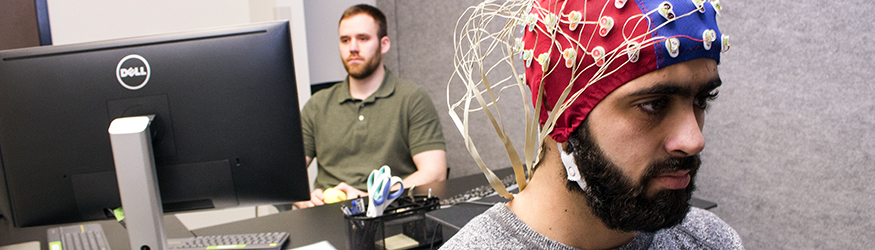
Behavioral neuroscience is the study of the biological basis of behavior. It focuses on the neural, hormonal, and physiological control of behavior, and describes processes such as motivation, emotion, learning, memory, and perception. The ways these processes play out differ within each individual and social context.

Technological improvements have shaped the way traditional behavioral neuroscience processes occur. Several recent trends have been outlined below, although it is important to note that this list is by no means exhaustive. The applications of neuropsychology are limited only by the human imagination.

Frontiers in Neuroscience

Trends in Neuroscience publications list

Cognitive Neuroeconomics

Cognitiveneuroeconomics is an interdisciplinary field that seeks to explain human decision making, risk analysis and management, and assignment of intertemporal choice. It studies how economic behavior can shape our understanding of the brain, and how neuroscientific discoveries can influence economic frameworks.


Dan Ariely is a behavioral economist who has much to say on the topic of decision-making.

Neuroergonomics

Neuroergonomics is the application of neuroscience to ergonomics. Neuroergonomics has two major aims: to use existing and emerging knowledge of human performance and brain function to design such systems for safer and more efficient operation, and to advance understanding of human brain function in relation to cognitive processes and performance in real-world tasks.


Dr. Raja Parasuraman talks about neuroergonomics in the military and disaster context.

BMI / BCI

Brain-Machine Interface / Brain-Computer Interface (BMI / BCI) is a specific application of neuroergonomics. It is a direct communication pathway between the brain and an external device. BMI/BCI works by inputting electrical signals from the brain into a controlled device. The most common use of this technology is to assist disabled individuals in daily functioning. This technology holds great promise to aid paralyzed patients by re-routing movement-related signals around damaged parts of the nervous system.


Dr. Jose del R. Millan discusses his research on navigating wheelchairs using brain activity.  

Social Cognitive Neuroscience

Social cognitive neuroscience is a blend of social psychology and neuroscience methodology. It is a discipline that seeks to understand how the brain controls cognitive processes like memory and attention, which then influence social behaviors such as stereotyping, emotions, attitudes and self-control. An increasingly global and diverse society means greater exposure to different cultures and emerging new social behaviors.  Use of advanced brain-imaging technology provides additional information about the mind-body connection in an environment with diverse contexts.


Neuroscientist Vilayanur Ramachandran discusses the importance of mirror neurons in allowing us to learn complex social behaviors.


3640 Colonel Glenn Highway - Dayton, Ohio - 45435
Wright State University biplane logo
Copyright Information © 2012 | Accessibility Information
Last updated: Fri. Aug-17-12, 12:11
Please send comments to: webmaster@wright.edu