Wright State Home Page  
BMS Graduate Student Organization Journals Student Seminars BMS Home Page
College of Science and Mathematics Home Page School of Medicine Home Page'


Applied Biomedical Computation

Train with faculty from biologically-based and computationally-based departments whose research emphases range from refinement of computation methods to describing particular biological processes or structures.


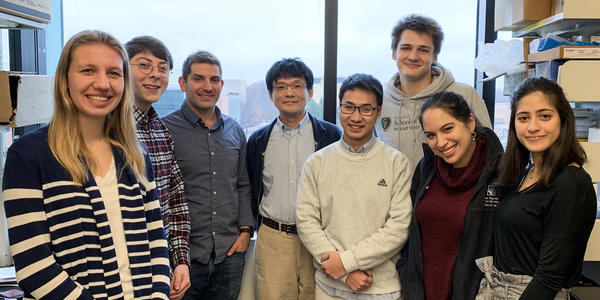
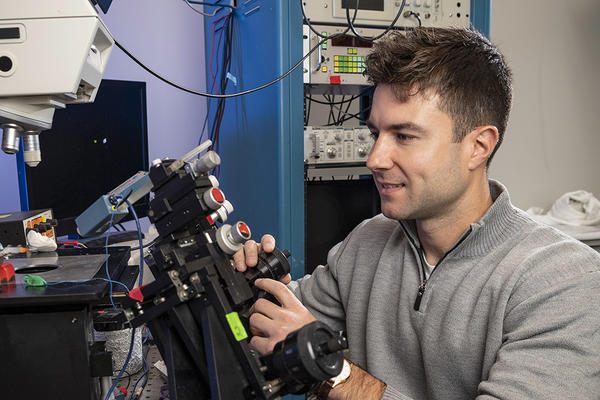
Dr. Alter and his students

Recent advances in structural biology, cell biology, molecular genetics and computer science have transformed biological sciences into a discipline in which computation is an essential component. Computational methods allow researchers to rationally propose structures of complex molecules and systems, to quantitatively test hypotheses regarding multifaceted molecular, cellular, organismic and population processes, and to organize, as well as test relationships in vast and complex data sets. In this concentration, you will train with faculty from biologically-based and computationally-based departments whose research emphases range from refinement of computation methods to describing particular biological processes or structures. Modeling of macromolecular structure, biological processes, and construction as well as mining of large databases are areas of emphasis within this concentration. In addition to BMS seminars and curriculum, students within this area of concentration will participate in a Biological Computation seminar program, in departmental seminar programs, and in biological/biomedical research forums. Through these ways, graduates from this concentration are trained for research careers in the exciting and dynamic interface between biomedical and computational disciplines.

Participating faculty and areas of research
Note: Linked pages will be opened in new windows

Biological Sciences Department
  • Keith Grasman, Ph.D. Ecotoxicology, immunotoxicology, endocrine disrupters [home][e-mail]
  • Dan Krane, Ph.D. Molecular evolution, population genetics [home] [e-mail]

Department of Biochemistry and Molecular Biology
  • Gerald M. Alter, Ph.D. Protein structure and dynamics. Dissertation qualified. [home][e-mail]
  • Steven Berberich, Ph.D. Nuclear proteins associated with cellular proliferation; oncogenes and tumor suppressor genes. Dissertation qualified. [home][research][e-mail]
  • John Paietta, Ph.D. Molecular genetics, gene regulation, and control of sulfur metabolism. Dissertation qualified. [home][e-mail]
  • Nicholas V. Reo, Ph.D. Nuclear magnetic resonance (NMR) studies of liver metabolism; hepatotoxicity and effects of peroxisome proliferators. Dissertation qualified. [home][e-mail]
Department of Chemistry
  • Paul Seybold, Ph.D. Biophysical chemistry. [home][e-mail]
Department of Physics
  • Brent D. Foy, Ph.D. NMR measurements of diffusion in cartilage, toxicokinetic modeling, C-13 NMR and modeling carbohydrate metabolism in liver [bio][e-mail]
  • Thomas Hangartner, Ph.D. Quantitative bone imaging and bone diseases. Dissertation qualified. [home][e-mail]
Department of Neuroscience, Cell Biology and Physiology
  • Melvyn Goldfinger, Ph.D. Central and periferal nervous system processing of digital and analog information. [bio][e-mail]
  • Dan Halm, Ph.D. Epithelial physiology using electrical recording, including patch-clamp, and functional imaging with fluorescent probes [bio][e-mail]
Department of Mathematics and Statistics
  • Thomas Svobodny, Ph.D., Applied mathematics/scientific computing [home][e-mail]

Department of Pharmacology and Toxicology
  • John Frazier, Ph.D. In vitro toxicology, biologically-based modeling, hepatocyte culture [home][e-mail]
Clinical Departments, School of Medicine
  • Roger Siervogel, Ph.D. Body Composition and risk for cardiovascular diseases [home][e-mail]
Biomedical, Industrial, and Human Factors Engineering Department (BMIHFE)
  • Thomas Hangartner, Ph.D. Quantitative bone imaging and bone diseases. Dissertation qualified. [home][e-mail]
Department of Computer Science and Engineering
  • Michael Raymer, Ph.D. Rational drug design, protein structure modeling, quantitative structure-activity relationship (QSAR) studies, microarray ("genechip") expression data analysis, evolutionary computation, and pattern recognition. [home][e-mail]
  • Mateen Rizki, Ph.D. Pattern recognition, machine learning (self-computing), ATR, image processing [home][e-mail]
  • Guozhu Dong, Databases; data mining; classification and bioinformatics. Dissertaiton qualified. [home][e-mail]
  • Travis Doom, Ph.D. Bioinformatics; algorithm design and analysis. [home][e-mail]
 

Areas of concentration: Applied Biomedical Computation | Applied and Predictive Toxicology | Cell Biology & Physiology | Chemical and Structural Biomedical Sciences | Epidemiology | Immunology | Medical Physics and Engineering | Molecular Biology and Biochemistry | Neuroscience

program of study | financial support | prerequisites | location | alumni | job lists
graduate student organization
| journal links | bms seminars | bms home

gold spacer bar
Complete your application by March 1
Contact Diane Ponder in the BMS PhD Program Office
gold spacer bar
copyright
last modified on October 31, 2003
Comments, questions and suggestions are welcome. (sjm)
Official WSU disclaimer